
Kissimmee, FL · Garage Door Service
Garage Door Maintenance for Celebration's 2004-Era Homes
Celebration's homes mostly went up around 2004 - newer steel doors and torsion springs hitting their 20-year mark. Maintenance built for that hardware, not Kissimmee's older stock.
- Repairs & new doors
- Springs & openers
- Serving 7 nearby communities
What Causes It Around Here
Celebration is a different animal from most of the towns we cover out of Kissimmee. The town was built out around 2004, which means almost every garage door in the neighborhood is the same age and the same basic type: factory-painted steel panels on torsion spring systems, with openers that still use the chain or belt drives standard for that build era. There's no mix of 1970s extension-spring holdouts next to newer torsion setups like you'll find in older pockets of the service area - it's one generation of hardware, aging together.
That uniformity has a downside. A torsion spring is rated for a service life measured in cycles, and most residential springs are good for somewhere in the 10,000-15,000 cycle range before fatigue sets in. Doors installed in the early-to-mid 2000s are now old enough that spring fatigue, worn rollers, and stretched cables are showing up across the board at roughly the same time. Add Celebration's mild, humid Florida climate - not freeze-thaw, but steady moisture that breaks down grease on hinges and invites surface rust on unpainted hardware - and you get a predictable set of symptoms arriving in a predictable window.
What the Fix Involves
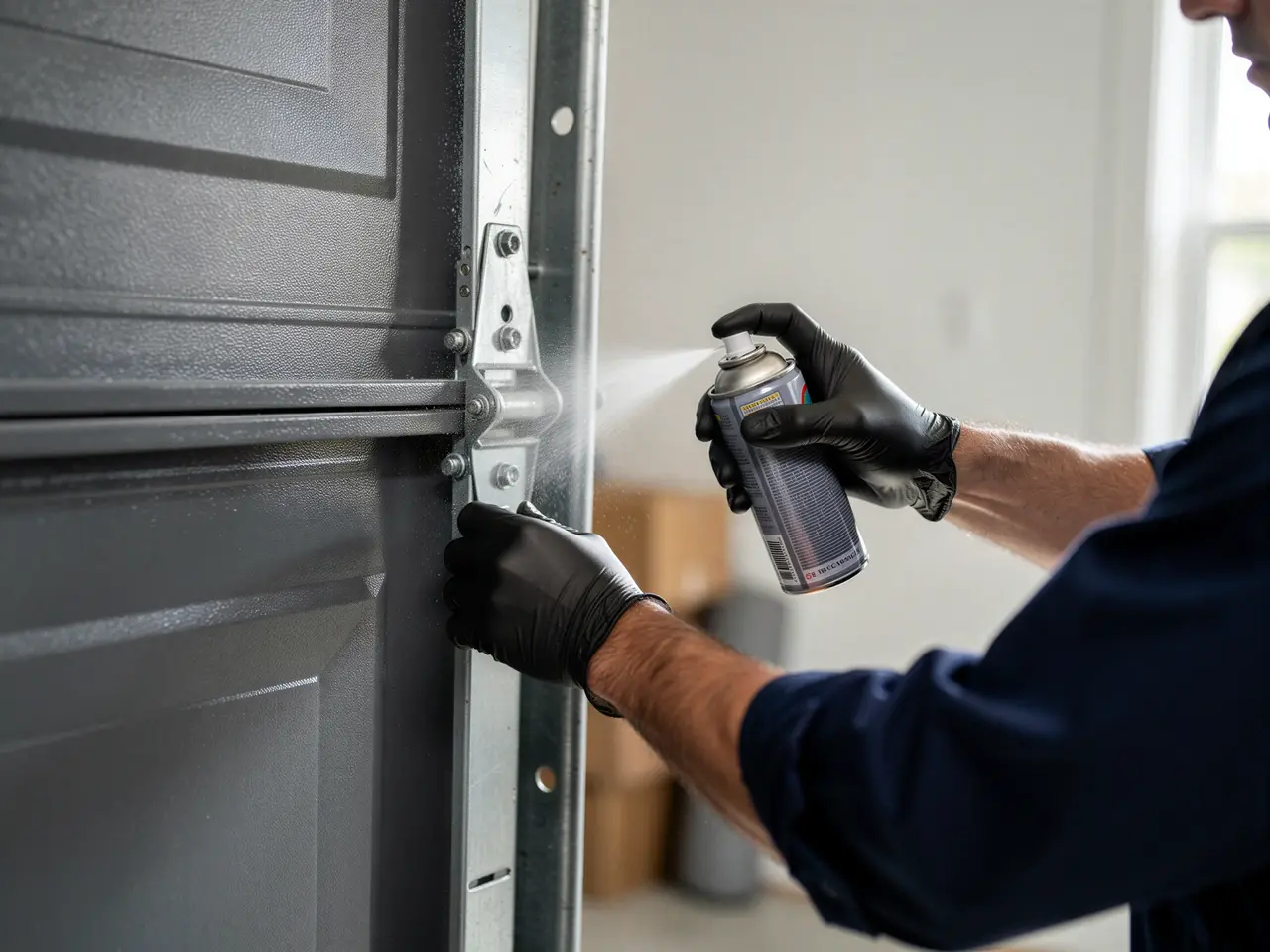
On a door this age, maintenance isn't a quick squirt of WD-40 and a glance at the opener. We check torsion spring tension against the door's actual weight, since springs lose a measurable amount of lift over nearly two decades and most owners never notice until the opener starts straining to compensate. We inspect and lubricate rollers and hinges with the right grease - not household oil, which attracts grit in this humidity - and check the tracks for the kind of gentle bend that comes from small impacts over 20 years of daily use.
We also test the opener's safety reversal and force settings, since factory settings drift as springs weaken and cables stretch, and we look at weatherstripping along the bottom panel and sides. At this age, original seals are usually cracked or compressed flat, which lets in moisture and pests even if the door still looks fine from the driveway. None of this is glamorous work, but it's the difference between a door that runs quietly for another decade and one that fails on a Saturday morning with the car trapped inside.
The Symptom
The most common call we get from this part of our service area is a door that's gotten noticeably louder or slower over the last year or two - not broken, just working harder than it used to. That's almost always a spring losing tension combined with rollers that have gone dry or started to wear flat on one side. You'll hear it as a grinding or popping sound partway through the cycle, or notice the opener pausing or straining before the door clears the floor.
A second pattern shows up as uneven closing - one side of the door touches down a half-second before the other, or the door looks slightly crooked when fully closed. On a 20-year-old torsion system, that's often one spring losing strength faster than its twin, which puts uneven load on the cables and track on that side. Left alone, it accelerates wear on everything downstream. Caught during a maintenance visit, it's a straightforward adjustment, not a full spring replacement.
The DIY Question
There's a fair amount an owner can safely do between visits. Wiping down tracks, checking that the photo-eye sensors near the floor are aligned and unobstructed, and listening for new noises are all things you can handle without tools. If you want to lubricate hinges and rollers yourself, a silicone-based garage door lubricant works better in this humidity than general-purpose oil.
What we don't recommend owners touch is the torsion spring itself. A spring under tension on a door this age - with nearly 20 years of cycles already on it - can fail suddenly, and it's holding enough stored force to cause a serious injury. Same goes for adjusting the opener's travel limits or force settings past what's in the owner's manual; get those wrong and you risk the door coming down with more force than it should. If a job needs the spring touched, that's the one honest line we draw - call it in rather than open the housing yourself.
Getting It Booked In
We run out to Celebration from Kissimmee, about eight miles each way, so there's no local branch here - just a truck that comes when you call. Celebration is a small community, under 5,000 households, so we're not running a high volume of visits through the neighborhood on any given week, which means scheduling tends to be straightforward rather than squeezed into a tight local route.
Given the age of the housing stock here, we'd rather catch spring fatigue and seal wear on a scheduled maintenance visit than get the emergency call after a cable snaps on a Sunday. If you're not sure whether your door needs a tune-up or a bigger repair, start with the Celebration service page below, or see how we handle maintenance more broadly out of Kissimmee.
Frequently asked questions
How old does a torsion spring have to be before it needs checking?
There's no fixed calendar age - it's about cycle count, not years - but a door installed around 2004 that's never had the spring inspected is due for a tension check. Most residential springs are rated well under the number of cycles a door this age has likely seen, so fatigue is a reasonable thing to rule out now rather than wait for a snap.
Why does my 20-year-old door sound different than it used to?
New noise on an older door is almost always worn rollers, dry hinges, or a spring that's lost some of its original tension - all normal wear at this age, not a sign the door is about to fail outright. It's worth having it checked before the noise turns into a stuck or crooked door.
Do you have a branch in Celebration?
No. We work out of Kissimmee and drive out to Celebration, about eight miles, for scheduled and call-in visits. There's no local depot here, just a truck that comes when you book.
Can I replace the weatherstripping myself?
Yes, bottom and side seals are one of the easier DIY jobs - cut to length, press into the track, done. It's the spring and the opener's force settings we'd ask you to leave to a visit, since those involve stored tension or settings that affect how hard the door closes.
More garage door services in Celebration
Book garage door service in Kissimmee
Call now or request a quote - tell us what the door is doing and where you are.