
Kissimmee, FL · Garage Door Service
Why So Many Kissimmee Garages Still Have Bare Steel Doors
Most Kissimmee homes went up in the 1980s and 90s, before garage doors needed insulation, leaving bare steel panels exposed to central Florida heat and damp.
- Repairs & new doors
- Springs & openers
- Serving 7 nearby communities
When to Get Help
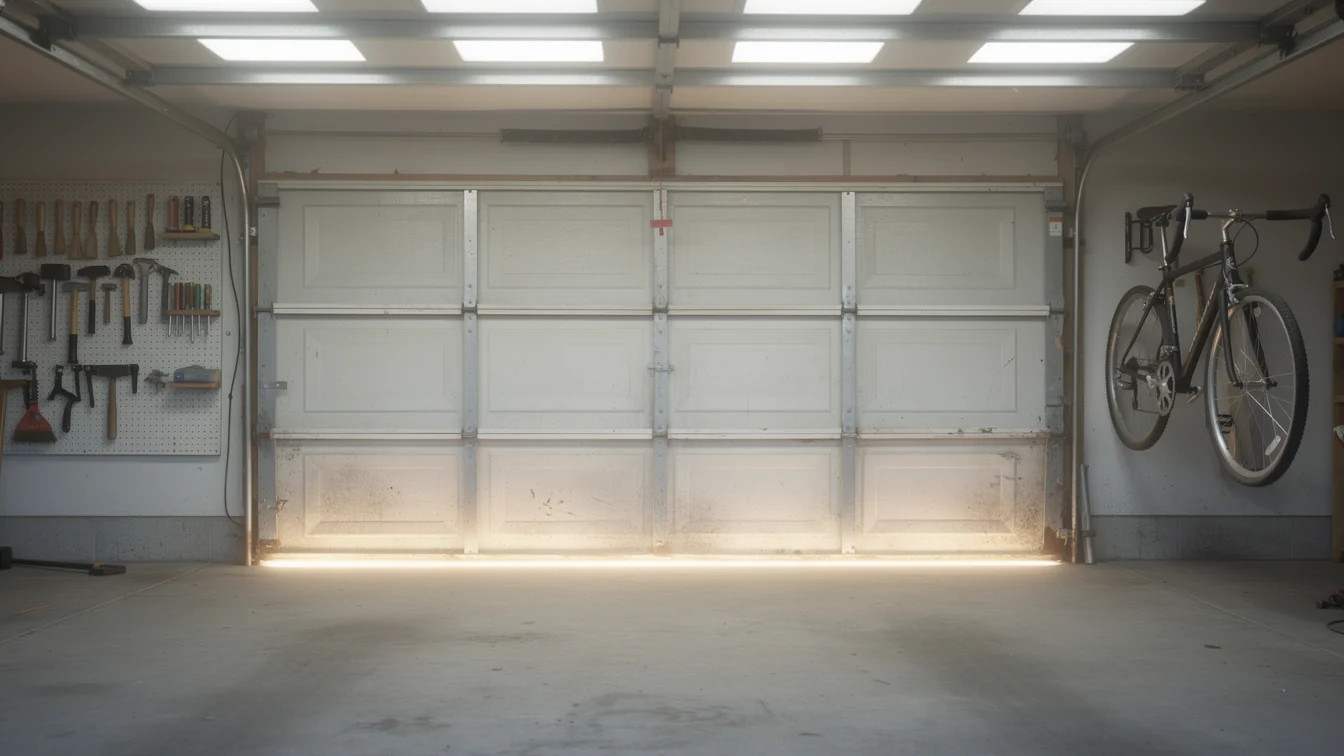
Half the housing stock in this service area was built by 1996, which means a lot of garage doors are either original to the house or one replacement cycle in. If your door is from that first wave, watch for panels that feel warm to the touch on one side and cool on the other, or a door that sweats along the bottom seal on humid mornings. That's an uninsulated steel skin doing exactly what it was built to do back then, which is nothing more than keep weather out. Rust blooming along the bottom panel, hinges that have stretched their screw holes, or a door that's noticeably heavier to lift by hand than it used to be are signs the steel itself is tired, not just the hardware. None of that is an emergency the way a snapped cable is. But if you're also hearing a grinding pop when the door opens, or seeing a visible gap of daylight along one side when it's closed, don't wait on that one. A torsion spring at the end of its life or a track that's pulled away from the frame can let a door come down fast, and that's worth a same-week call rather than a someday one.
How Local Conditions Play In
Most construction across the 31 communities this company works in, from Campbell four miles out to Haines City eighteen miles away, clusters in the 1980s and 90s. That's before garage doors in this part of Florida were commonly built with a foam core or a thermal break at the bottom seal. The result is a lot of single-layer steel panels doing the full job of weather barrier, insect barrier, and sound barrier at once. In a mild temperate climate like this one, that's less about keeping heat in during winter and more about what a bare steel panel does in a Florida summer: it absorbs heat all afternoon and radiates it straight into the garage, and often into whatever room shares a wall with it. Areas like Hunters Creek and Southchase, built in roughly the same stretch, see the same pattern. Houses that went up a little later, closer to the 1996 median for the area, sometimes got a thin vinyl-backed panel instead of bare steel, but that's a coating, not real insulation, and it doesn't do much for the sweating and heat load problem on its own.
The Seasonal Bit
This area sits in a mild temperate band, so garage doors here rarely deal with freeze-thaw cracking the way doors do farther north, and you won't see a torsion spring seize up from cold the way it might in a harsher climate. That's the good news. The seasonal pattern that does matter here is the long stretch of heat and humidity through the warmer months. An uninsulated door built in the 1980s or 90s heats up through the afternoon and holds that heat into the evening, and if the garage shares a wall with a bedroom or laundry room, that heat load shows up on the energy bill whether or not anyone notices the door itself. Humidity is the other half of it. Condensation forming on the inside face of a cold steel panel after a hot day cooling down can drip onto whatever's stored against that wall, and over years it's part of why bottom panels on original doors rust from the inside before they rust from the outside. None of this is dramatic. It's slow, and it's exactly the kind of wear that gets ignored until the panel finally buckles.
The Problem
Here's the honest part: a foam insulation kit glued into an old steel panel does not fix a door that's already warped, rusted along the bottom, or running on a bent track. It adds a little thermal mass to a door that's structurally fine, and that's it. If the panel itself is compromised, insulating it is money spent on a door you'll replace in a few years anyway. With 108,626 owner-occupied houses across a service area of 204,994 households, a lot of these garages are original equipment nobody's touched since the house went up, and for those, the real decision isn't insulation versus no insulation, it's repair versus replace. At a median household income of $78,234 for the area, a full replacement with an insulated door is a real option for most owners here, not just a patch job. We won't talk you into insulating a door that's past the point of it mattering, and we won't talk you into a full replacement if a new bottom seal and a service call would get you another several years out of a door that's otherwise sound.
Frequently asked questions
Is it worth insulating an old steel garage door instead of replacing it?
If the panel is still straight and the hardware is sound, a foam kit can cut down on heat radiating into the garage. If the bottom panel is already rusted or the door is warped, insulating it is wasted money since you'll be replacing the door anyway within a few years.
Why does my garage door sweat on humid mornings?
Bare steel panels, common on houses built through the 1980s and 90s in this area, cool overnight and then condense moisture when warm humid air hits them in the morning. It's a sign of an uninsulated panel, not a leak, and it's part of why bottom panels on original doors rust from the inside out.
Do I need a more weather-resistant door because of the climate here?
This area sits in a mild temperate band, so you're not dealing with freeze-thaw stress on hardware. The bigger local factor is heat and humidity load on an uninsulated panel through the warmer months, which is a comfort and condensation issue more than a structural one.
Related garage door services in Kissimmee
More garage door guides
Book garage door service in Kissimmee
Call now or request a quote - tell us what the door is doing and where you are.