
Kissimmee, FL · Garage Door Service
What a Cold Snap Does to a Garage Door Spring Here
In Kissimmee's mild climate, springs rarely cycle with daily freezes - but a cold snap on steel that's already decades old is when they actually let go. Here's what that means for this area's housing.
- Repairs & new doors
- Springs & openers
- Serving 7 nearby communities
When to Get Help
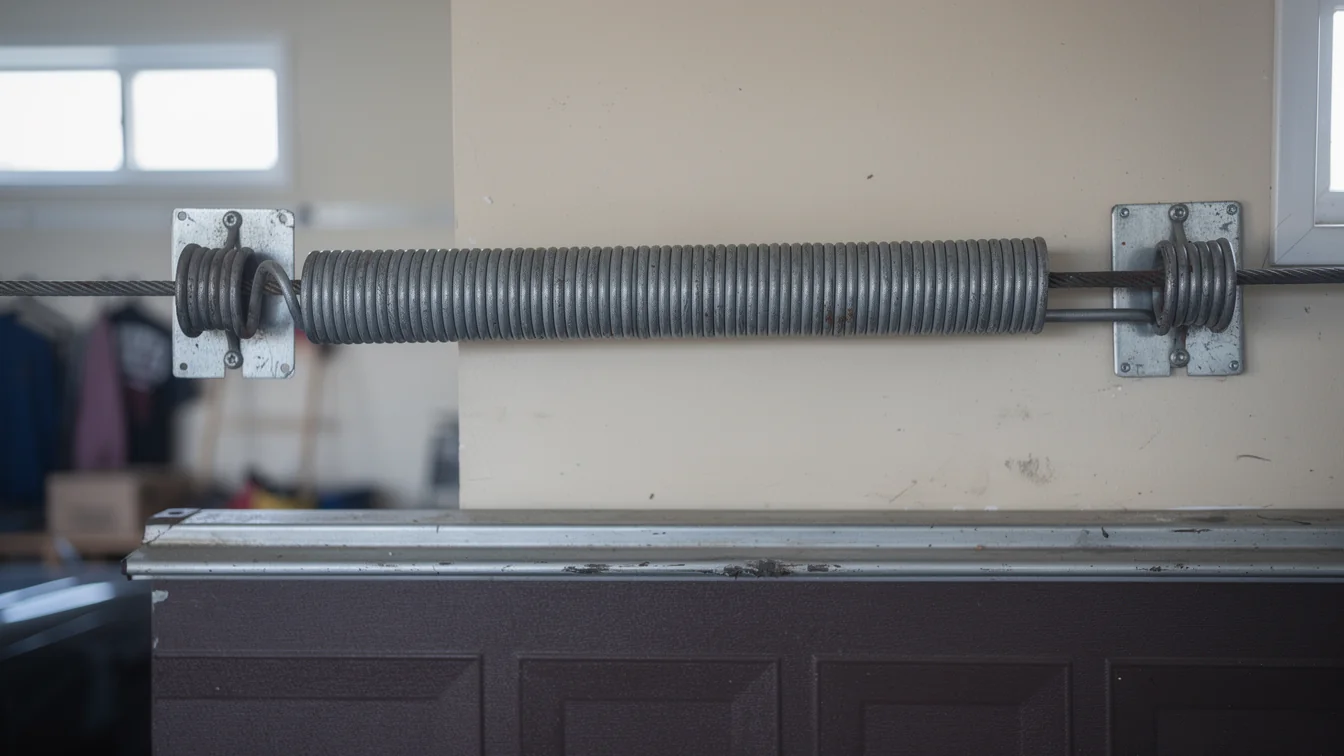
If a door won't budge, sags unevenly, or you hear a bang from the garage followed by the door refusing to open with the opener, that's a broken torsion spring, not a motor problem. Don't try to force it with the opener or by hand - a broken spring means the full weight of the door is sitting on the opener's drive gear and the tracks, and that's how panels bend and cables come off the drum. Call before you try to muscle it. Given the age of a lot of housing stock in this area - F1 puts the build years at 1964 through 2021, with the typical house going up around 1996 - a fair number of these doors are running original or first-replacement springs that are thirty years old. A spring that old doesn't need much of a push to finally snap. If the door is still moving but sounds rough, grinding, or drops a few inches before catching, that's usually a spring on its way out rather than one that's already gone, and it's worth a look before it fails on you at an inconvenient hour.
How Local Conditions Play In
Kissimmee sits in a mild temperate band, which cuts both ways for garage door springs. You don't get the daily hard-freeze-to-thaw cycling that fatigues steel fast in a true cold-winter market, so springs here often last longer on the calendar than the same part would up north. But that also means homeowners don't think about springs as a cold-weather item at all - until a rare cold snap hits and a spring that's already near the end of its rated cycles decides that's the day it's done. The service area here covers a wide spread, from Campbell and Hunters Creek just a few miles out to Haines City and Davenport fifteen to eighteen miles away, and across all of it the spring stress is the same: steel doesn't care that the average January low here is mild, it cares about how many open-close cycles it's already absorbed and whether the metal has gotten brittle with age. A 20-degree overnight dip after years of South Florida humidity is enough to turn a borderline spring into a broken one.
The Seasonal Bit
Most of the housing stock across the 31 named communities in this service area went up through the 1980s and 90s, which puts a lot of torsion springs here well past the point where manufacturers consider them reliable - standard residential springs are rated for somewhere around 10,000 cycles, and a door used twice a day for twenty-five years has used most of that up regardless of weather. What a cold snap does is act as the last straw on a spring that was already fatigued from age and use. The metal contracts slightly, it's a little less forgiving under tension than it was in August, and a spring hanging on by a thread finishes the job. This isn't a December-only problem - it can happen on any cooler morning - but it clusters around the handful of nights each winter when temperatures actually drop enough to matter in a climate that doesn't usually ask much of a garage door spring.
The Problem
Here's the honest limit: we can't tell you a spring is about to go before it does. There's no reliable way to inspect a torsion spring and say it has three months left versus three years - once a spring is near the end of its cycle life, it can look fine until the moment it isn't. What we can do is replace both springs on a double-spring system when one breaks, even if the other looks okay, because if one has hit its cycle count on a house built in the same era, the other usually isn't far behind. Replacing only the broken one on an older system is a common shortcut that just means a second service call within a year or two. Across the roughly 108,626 owner-occupied houses in this area, spring age tracks pretty closely with the housing boom of the 80s and 90s, and that's the group most likely to be due.
Frequently asked questions
Does cold weather actually cause garage door springs to break in Kissimmee?
Not on its own. Kissimmee's mild climate means springs here don't get the daily freeze-thaw stress that wears them out fast in colder regions. But a cold snap can be the final push on a spring that's already old and fatigued from years of regular use, which is common given how much of the housing stock here dates to the 1980s and 90s.
How old does a garage door spring have to be before it's a risk?
It's less about calendar age and more about cycle count - how many times it's opened and closed. A spring rated for around 10,000 cycles on a door used twice daily can reach that mark in roughly fifteen years. Given the area's housing median build year sits around 1996, plenty of springs out there are past or near that point.
Can I replace just the broken spring and leave the other one?
You can, but if both springs were installed at the same time and one has worn out, the other has usually seen the same number of cycles and isn't far behind. We generally recommend replacing both so you're not back out again within a year or two for the second failure.
Why does my door sag on one side before the spring fully breaks?
That's usually a spring losing tension gradually rather than snapping outright. It still needs attention - a door running on an unevenly tensioned spring puts extra strain on the opener and the tracks, and it tends to fail the rest of the way without much warning, cold weather or not.
Related garage door services in Kissimmee
More garage door guides
Book garage door service in Kissimmee
Call now or request a quote - tell us what the door is doing and where you are.